
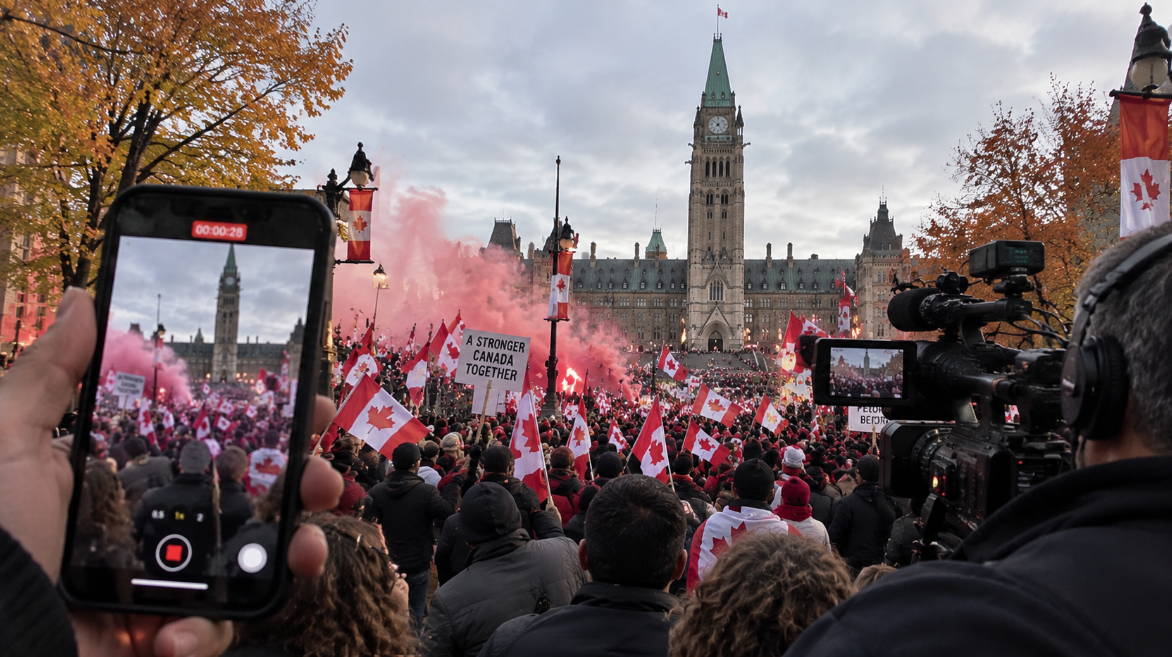
This is an editorial scenario, not a report of a specific incident.
Imagine a broadcast filmed outside a prominent building. After the main conversation ends, a wider shot catches a side entrance, an adjoining wall and the everyday movement around them. Viewers begin discussing a part of the place that the interview scarcely mentioned.
A wider frame changes the question
The new angle might encourage a reader to ask how the building relates to its surroundings. Where do people approach it? Which side faces the public space? What looks ceremonial from one position and ordinary from another?
Those are questions about the visible scene. They do not establish the date of an alteration, the purpose of a doorway or the intentions of the people passing through. An architectural account should resist turning a glimpse into an unsupported history.
Describe the detail before giving it a meaning
A useful next step would be to compare the observation with a documented plan, a dated photograph or a reliable place record. If no such source is available, the description can remain limited and honest.
In this imagined example, the off-air moment matters because it makes room for a different scale of attention. The building is no longer only the backdrop to a presenter. It becomes a place with edges, neighbouring spaces and questions that deserve their own account.
General information and editorial perspectives. For a specific service, venue or arrangement, check with the responsible organization. Send a question or correction.